Dutch alcohol policy
The government is working to combat problematic alcohol use in our society.
The aims are:
- No alcohol consumption under the age of 18
- No alcohol consumption during pregnancy
- Less excessive and heavy alcohol use
- Greater awareness of one’s own drinking behaviour and its effects
Six kinds of policy instruments are used:
1. Alcohol Act
2. Rules on alcohol advertising
3. Penalties for driving while intoxicated
4. Taxation
5. Education and prevention
6. Treatment and rehabilitation
An important principle in Dutch alcohol policy is, that only a well-balanced coherent package of measures is considered to be effective.
Policy memoranda
The first adopted alcohol policy memorandum (Alcohol en Samenleving) dates from 1986. The second one was the so-called Alcoholnota.
A more recent alcohol policy document is the (Hoofdlijnenbrief alcoholbeleid) from 20 November 2007. It was a joined memorandum from the ministers of Health, Welfare and Sport, of Youth and Family and of the Interior. It has been debated in Dutch Parliament in December 2007.
In December 2016 State Secretary of Health, Martin van Rijn, sent an Evaluation of the Alcohol Licensing and Catering Act to parliament. This document also addresses other alcohol policy instruments (including excise duty) and can therefore be seen as an alcohol policy document. The discussion of this document in Parliament was in February 2017.
National Prevention Agreement
The National Prevention Agreement was launched on 23 November 2018. The document consists of a package of projects and measures on reducing smoking, overweight and problematic alcohol use. The cabinet and the 70 signatories want, among others, to achieve a smoke-free generation in 2040, that young people and pregnant women do not drink alcohol, that everyone is much more aware of the risks of alcohol, that the number of problem drinkers falls, as well as the number of people who are overweight. The Dutch Institute for Alcohol Policy STAP was one of the signatories.
After the publication of the National Prevention Agreement in 2018 the discussions at the Alcohol Table continued for several years. All stakeholders in the Netherlands (alcohol industry, retailers, catering, students, local governments, health organizations et cetera) discussed at that table the future of alcohol policy and the necessary measures to achieve the targets set in the National Prevention Agreement. However, in October 2022, State Secretary Maarten van Ooijen stopped the consultations when it became clear that this did not lead to the necessary additional measures that must be taken to achieve the goals of the National Prevention Agreement.
Alcohol Manifesto and Dutch Alcohol Policy Alliance
11 health organizations launched at the end of 2016 an Alcohol Manifesto. In the Alcohol Manifesto, the organizations challenge the national government and local authorities to give priority to three effective alcohol policy measures (the so-called 3 Best Buys): an increase in the price of alcohol, a reduction in the number of sales outlets and a ban on alcohol advertising.
The organizations signing the Alcohol Manifesto are the following: FAS Foundation of the Netherlands, GGD GHOR Nederland (the Association of Community Health Services and Regional Medical Emergency Preparedness and Planning services), Iriszorg, Jellinek Amsterdam, Lectoraat Verslaving Hogeschool Windesheim, Mondriaan Centrum voor Geestelijke Gezondheid, Dutch Institute for Alcohol Policy STAP, Nederlandse Vereniging van Drank- en Horecawet Inspecteurs (NVDI), Novadic-Kentron, Verslavingspreventie Nederland en Victas Centrum voor Verslavingszorg. The Collaboration of Health Funds supports the Alcohol Manifesto.
Since 1 January 2020, some of these organizations have been working together as AAN: The Dutch Alcohol Policy Alliance in order to be able to make a joint statement at regular intervals in the future as well. AAN organised for many years the campaign 'Seeing drinking, does drinking'. Various social organizations joined this initiative.
Alcohol en Samenleving (14,4 MB)
Hoofdlijnenbrief alcoholbeleid (69,2 kB)
Evaluatie Drank- en Horecawet (376 kB)
Nationaal Preventieakkoord (528 kB)
-
1. Alcohol Act
General principles of the Alcohol Act
The Alcohol Act, entered into force on 1 July 2021, is the name of the revised Alcohol Licensing and Catering Act of 1964 (which came into effect in 1967 and since then amended several times). The Alcohol Act is a statutory law regulating the selling and serving of alcohol. The Alcohol Decree and the Alcohol Regulation contain further rules for the elaboration of the Alcohol Act. The law and the lower regulations fall under the responsibility of the Minister of Health, Welfare and Sport.
According to the Alcohol Act, the off premise sale of mildly alcoholic beverages is only allowed in grocery stores and licensed liquor stores. Mildly alcoholic beverages are drinks with an alcohol content above 0.5 ABV, but below 15% ABV, plus fortified wines. The off premise sale of strong alcoholic beverages (spirits with an alcohol content of 15% ABV or more, minus fortified wines) is restricted to licensed liquor stores.
Alcoholic drinks may not be sold at gas stations and from kiosks. The use of vending machines is not allowed. It is forbidden for a retailer to offer more than 25% off the price he normally charges. Nor should he give the impression that he is more than 25% cheaper than others.
The on premise sale of alcoholic beverages is only permitted in licensed catering venues. Retailers and service providers (hairdressers, laundries, beauticians, etc.) are therefore not allowed to serve alcohol.
The Alcohol Act also regulates distance selling of alcoholic beverages, at least insofar it concerns companies established in the Netherlands.
Mildly alcoholic beverages may be ordered online or by telephone from grocery and liquor stores, web shops, beer couriers and delivery restaurants. All of these companies are allowed to deliver these beverages or have them delivered to private homes or distribution points. Delivery at a public place (for instance a park) is not allowed. No licence is required. Delivery by web shops, beer couriers and delivery restaurants must take place from a non-public closed warehouse.
Only licensed liquor stores may offer strong alcoholic beverages via the liquor store's website and take orders for strong alcoholic beverages online or by telephone and have them delivered to private homes or distribution points. The website may not offer simultaniously services or products that are not related to the liquor store.
Licensing system
Catering venues and liquor stores require a licence to supply alcohol. They will receive this from the mayor if they meet certain requirements.
Firstly, requirements set for the licence-applicant/the entrepeneur, the general manager and the shop supervisor him or herself. All these supervisors should not exhibit signs of misconduct nor have committed any serious crimes during the last five years or be a repeated offender of less serious crimes, such as drunk driving. In addition to this, they should be at least 21 years old and have passed a course on 'responsible serving'. The names of all supervisors are listed on the appendix to the licence.
There is since April 1, 2024 one exception: shop-supervisors of liquor stores are not checked for misconduct and criminal behavior and their names are not listed on the appendix to the licence.
Secondly, there are building requirements of licensed outlets. The minimum floor area of a liquor store is 15 m²; one catering area is 35 m² or more. Liquor stores and catering areas must be surrounded by walls and have a door that can be locked. Liquor stores should not be directly connected to another shop. There must be a hallway between both stores. These requirements are additional to the requirements of the Building Works and Living Environment Decree.
The Alcohol Act contains various rules to prevent mixing of formulas. This is to protect (young) consumers and problem drinkers. It is not permitted to carry out retail activities in a catering area. That is only allowed in other parts of the building.
Only drinks and articles associated with drinks may be sold in liquor stores. Letting customers taste is permitted under certain conditions. A municipality can determine that organizing paid tastings and courses is permitted after regular shopping hours.
Bartenders and liquor store supervisors may not allow the presence of intoxicated persons and may not themselves be drunk or intoxicated during work.
The mayor, as the competent authority, can grant exemptions from the licensing requirement, so that during 'special occasions of a very temporary nature' or events (maximum 12 days) mildly-alcohol drinks can be served for direct consumption without a license.
Age limits
History age-limit purchasing alcoholic beverages
| Year | Mildly alcoholic beverages | Strong alcoholic beverages |
|---|---|---|
| 1886 | - | 16 year (Penal Code 1881) |
| 1932 | 16 year (Drinks Act 1931) | 16 year (Penal Code 1881) |
| 1967 | 16 year (Alcohol Licensing and Catering Act 1964) | 18 year (Alcohol Licensing and Catering Act 1964) |
| 2014 | 18 year (Alcohol Licensing and Catering Act 1964) | 18 year (Alcohol Licensing and Catering Act 2014) |
| 2021 | 18 year (Alcohol Act 2021) | 18 year (Alcohol Act 2021) |
-
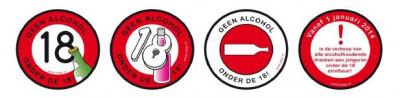
Since 1 January 2014, there is one age limit of 18 years for on and for off premise purchasing of both mildly and strong alcoholic beverages, direct or indirect. The 18+-amendment was introduced by 4 MP's in a private members' bill. In the European Union 18 year is the most common alcohol purchasing age.
The purchaser has the legal obligation to check the age of the buyer in advance (verification of identity document). Indirect purchasing to a young person occurs when an alcohol seller provides a drink to an adult when it is abundantly clear that the drink will be - on sight - passed on to someone that is not obvious 18 year or older.
With the new Alcohol Act 2021, not only the alcohol seller, but also the adult who passes the drink is punishable. Another adjustment since the new Alcohol Act is that when selling alcohol online and by telephone, the age of the buyer must be verified when placing the order. Besides, the drink must be delivered in a secured manner. This means that the age of the person who gets the drink must be checked again on the basis of an identity document. That is the responsibility of the seller.
Grocery stores, liquor stores, hotels, restaurants and cafés that sell alcohol without checking if the customer is 18 years or above risk a fine of at least €1,665. If liquor stores, hotels, restaurants or pubs habitually sell alcohol to young people without checking their age, the mayor can suspend their licence. If a grocery store sells alcohol to young people three times or more in one year without checking their age, the mayor can temporarily prohibit it from selling alcohol (for a maximum of 12 weeks). A distance seller that violates the rules may be temporarily deprived of the right to sell alcohol by the minister.
History age limit public possession alcoholic beverages
| Year | Mildly alcoholic beverages | Strong alcoholic beverages |
|---|---|---|
| 2013 | 12-16 year (Alcohol Licensing and Catering Act 2013) | 12-16 year (Alcohol Licensing and Catering Act 2013) |
| 2014 | 12-18 year (Alcohol Licensing and Catering Act 2014) | 12-18 year (Alcohol Licensing and Catering Act 2014) |
| 2021 | 12-18 year (Alcohol Act 2021) | 12-18 year (Alcohol Act 2021) |
-
In 2013, the legislator also introduced a national ban on public possession of alcohol by young people. They may not possess alcohol or have it ready for consumption in places open to the public. This concerns places from destination to general accessibility, such as public roads, public gardens, parks, porches, stairs, covered shopping centers, festival and event areas, sports fields, stations, stadiums, campsites (with the exception of the guests' tents), catering venues, etc. Young people were allowed to possess and consume drinks at home / in the private sphere or in places not accessible to the public, in passenger transport, at military stations and airports (after customs), food shops and liquor stores.
In 2013, this ban applied to young people aged 12 to 16 years, but it has been extended to 18 years in 2014. Since the new Alcohol Act of 1 July 2021, some exceptions to the ban have lapsed. Young people ages 12 to 18 are no longer allowed to possess and drink in passenger transport, at military sites and airports (after customs).
A few groups are excluded from the prohibition on having alcohol present or ready for consumption in places accessible to the public. Young people who work in a catering venue or a (sports)canteen or who are doing an internship in a catering venue or a liquor store are allowed to serve alcohol and to have alcohol present (pouring themself a drink, however, is not allowed). 16 and 17-year old test purchasers are also not punishable during enforcement actions.
Municipal enforcement officials (boas) and police officers enforce the ban. The fine for violation is currently € 55 for young people under the age of 16 and € 110 for young people aged 16 and 17. The violation will be included in the police registers for a period of 5 years. In most cases no entry will be made on the judicial documentation (criminal record).
Young people who violate this ban can be referred to Halt, at least if they meet certain conditions. There they participate in Halt Alcohol, an alternative sanctions programme.
Bill to amend the Alcohol Act
State Secretary Judith Tielen of Youth, Prevention and Sport submitted January 2026 to Parliament a bill that introduces several amendments to the Alcohol Act.
The main proposals are:
• Bingo and other games of chance will be allowed in hospitality venues. The current Alcohol Act does not permit gambling because the legislator previously considered the combination of serving alcohol and gambling undesirable.
• The law will explicitly state that the age of online purchasers of alcoholic beverages must be verified upon delivery (unless they are clearly older). This amendment allows enforcement authorities to fine delivery services, not just the seller, if they fail to perform age verification upon delivery of alcoholic beverages.
• The Netherlands Food and Consumer Product Safety Authority (NVWA) will be authorized to enforce this obligation.
• The NVWA will also be authorized to impose an administrative fine for violations of the ban on online sales of spirits without a permit.
Tielen has also announced a second phase of this bill. In this second phase, the possibility of extending the Alcohol Act's rules to online sellers based abroad and targeting Dutch consumers will be explored. A proposal for elaborating requirements for the age verification system will also be submitted during the second phase. This will take into account European developments in the field of online age verification and digital identity.
The Jetten cabinet took office in mid-February 2026, and alcohol policy became the responsibility of the Minister of Health, Welfare and Sport, Sophie Hermans. She is not expected to withdraw the current bill. Whether she will also pursue the announced second phase is unclear.
Supervision of alcohol providers
If a company or entrepreneur violates the legal rules of the Alcohol Act, prosecution can take place on the basis of the Economic Offenses Act. This happens in the event of serious violations and violations of Article 20, paragraphs 4 and 5, and Article 21 of the Alcohol Act.
Much more often, however, an administrative fine will be imposed if the Alcohol Act is violated. Both the mayor and the minister can impose such an administrative fine. The amount of the fine is laid down in the Alcohol Decree.
The inspections on behalf of the mayor are carried out by municipal special enforcement officials (boas). The inspections on behalf of the Minister of Health, Welfare and Sport are carried out by enforcement officials of the Netherlands Food and Consumer Product Safety Authority (NVWA). The latter have a number of national tasks. They supervise the distribution of alcohol in passenger transport, at military sites, at airports (after customs) and by the itinerant trade. They also enforce the rules about online alcohol orders and exorbitant price promotions in the retail sector.
There are more sanctions than monetary penalties. For example, the mayor can (or sometimes even has to) revoke the license of an offender temporarily or permanently, remove visitors from illegal catering venues and close a catering venue (under the Municipalities Act). On the basis of that law it is also possible to impose a penalty payment or administrative coercion.
A grocery store or a webshop not checking the age of the customer three times in one year may be temporarily deprived of the right to sell alcohol.
Not in the Alcohol Act
Identification age
The Alcohol Act does not mention an identification age. However, the supermarkets (united in the Central Bureau for Food Trade) and part of the catering industry (united in Koninklijke Horeca Nederland) have decided they will stick to an identification age for alcohol and tobacco of 25 years. In practice, this means that cashiers of supermarkets and bar staff of KHN catering venues will ask customers who they think look younger than 25 for their ID. These supermarkets and catering venues also ask their customers under the age of 25 to spontaneously show their ID.
Non-alcoholic catering venues
The licensing system of the Alcohol Act does not relate to the running of alcohol-free catering venues. An Alcohol Act licence is only required if you want to sell alcoholic beverages (more than 0.5% alcohol).
Private parties
The licensing system also does not apply when it comes to alcohol serving at private parties. This is the case if the organizer has a non-commercial relationship with the guests he has invited. In addition, guests do not pay an entrance fee and receive their drinks completely free of charge.
Catering opening hours
The Alcohol Act does not contain any rules regarding catering opening hours. Determining such hours is a competence of the municipalities on the basis of the Municipalities Act. The Alcohol Act only requires that municipalities determine in a local ordinance the alcohol serving hours in semi-commercial canteens.
Provisions regarding production, import and export
The Alcohol Act does not contain any national legal provisions regarding the production, import or export of alcoholic beverages. That does not mean that nothing has been arranged on this point, on the contrary. In addition to the general legislation on foodstuffs, there are also specific Dutch and European product regulations that are relevant for producers of alcoholic beverages.
The excise legislation states that consumers are allowed to make beer and wine for their own use. For the commercial production of beer and/or wine you need a licence. Private persons are not allowed to have a still. You need a Manufacturing Licence. Companies that want to store non-taxed alcoholic beverages need a Storage Licence.
Mandatory indication of product information
For labelling regulations see our theme page European alcohol policy.
Warning logos
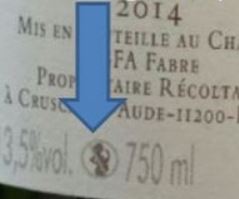
In the Netherlands labels with general or specific health warnings are not required. But on basis of self regulation 89% of the bottles have an alcohol and pregnancy icon. Unfortunately, these are very small and hard to see.
-
2. Rules on advertising
In the Netherlands there are three different sources with regulations about alcohol advertising and marketing:
1. The Dutch Advertising Code (and associated special codes)
2. The Media Act 2008
3. The Alcohol Act
Advertising of alcoholic beverages is in the Netherlands mainly controlled by self regulation of the drinks industry. Since 1990 an Advertising Code for Alcoholic Beverages is in effect. It is a special code of the Dutch Advertising Code. In 2000 this code has been amended. Since then there is a voluntary advertising ban on all media if 25% or more of the audience (viewers, listeners, readers or visitors) is under 18 years. Since a 2008 amendment there is an obligatory slogan (as of spring 2024: "NIX18"). In the Advertising Code for Alcoholic Beverages the rules of the Audiovisual Media Service Directive are incorporated.
Furthermore, there is since April 2024, an Advertising Code for Alcohol-Free Variants of Alcoholic Beverages. This code, also a special code of the Dutch Advertising Code, applies to advertising for all alcohol-free variants of alcoholic beverages with an alcohol content up to 0.5% ABV and applies to all organizations that advertise, such as producers, supermarkets and the hospitality sector. It stipulates, among other things, that advertising for alcohol-free and low-alcohol variants of alcoholic drinks, may not be aimed at young people under the age of 18 and that advertising for low-alcohol content variants (up to 0.5% ABV) must not be aimed at pregnant women and active traffic participation.
As of 2009 the Netherlands has a legal ban on alcohol advertisements on television and radio from 6AM to 9PM. Dutch broadcasters are not allowed to transmit during these hours commercials for all alcoholic beverages. This "time lock" is included in the Media Act 2008. The rules are enforced by the Dutch Media Authority. From STAP-research it appears that this “time lock” reduced advertising exposure to the youngest viewers while increasing exposure for the high-risk teenage population. This is because the alcohol producers, after the introduction of the "time lock", have trebled the number of TV-advertisements after 9PM.
The Alcohol Act contains an article that gives the minister of Health, Welfare and Sport the competence to regulate alcohol advertising in an order in council. But until now there is no such regulation in force.
3. Penalties for driving while intoxicated
Road and traffic safety is the responsibility of the minister of Infrastructure and Environment.
In the Netherlands, the legal limit for drivers is a blood alcohol concentration (BAC) of 0.5 pro mille. Novice drivers (people who received their driving license less than five years ago) are not allowed to have a blood alcohol concentration higher than 0.2 pro mille. This blood alcohol level also applies to people below the age of 24 and - as of July 2017 - for all drivers who used alcohol in combination with illegal drugs.
In the Netherlands random testing is allowed.
The Netherlands has three rehabilitation courses for road users committed drink-driving offences: EMA (Educational Measure Alcohol and Traffic), LEMA (Lighter version of EMA) and EMG (Educational Measure Behaviour and Traffic) .
1. EMA (Educational Measure Alcohol and Traffic) is a three-day course given to people who participated in traffic with a BAC between 1.3 pro mille and 1.8 pro mille.
2. LEMA (Light Educational Measure Alcohol and Traffic) consists of two half-days of 3.5 hours each. LEMA is intended for novice drivers with a BAC between 0.5 pro mille and 0.8 pro mille.
3. EMG (Educational Measure Behaviour and Traffic) is meant for drivers who repeatedly showed undesirable driving behaviour in the course of one drive. Also in the case of one single major speeding offence, a driver can be referred to EMG.
As of December 2011 the Netherlands started an alcohol interlock program for experienced drivers with a BAC between 1.3 pro mille and 1.8 pro mille and for novice drivers with a BAC between 1.0 promille and 1.8 pro mille. The government decided to stop the program in september 2016, as there were many legal and technical problems. The House wants reconsideration of that decision.
4. Taxation
Taxation is the responsibility of the minister of Finance.
Excise duties are levied on all alcoholic beverages. Like Value Added Tax, excise duties are included in the price the consumer pays. The tax is remitted to the Tax Administration by Dutch manufacturers, by traders and also by importers of alcoholic beverages.
For beer, the excise duty is levied according to alcohol content. Before 2024 the basis for the beer tax levy was the number of degrees Plato. There is a reduced rate for small breweries with an annual production of less than 200,000 hectolitres (they pay 7.5% less).
There are two excise duty rates on still and sparkling wines. If the alcohol content is more than 1.2%, but no more than 8.5%, the low rate applies, if the alcohol content is more than 8.5% (which is usually the case), the high rate applies. Cider is classified as wine for the purpose of excise duties.
There is a special excise duty for intermediate products (between wines and spirits, for example port, sherry and vermouth).
For spirits and hard seltzers the excise duty is levied as a set amount per hectolitre of pure alcohol.
In 2024 all alcohol excise duties went up by 8.4%. The tax per standard glass is:
| Dutch standard glass | Glass-size | Alcohol by volume | Excise duty |
|---|---|---|---|
| Standard glass of pilsner beer | 250 ml | 5% ABV | 10.2 eurocent |
| Standard glass of still or sparkling wine | 100 ml | 12% ABV | 9.6 eurocent |
| Standard glass of Dutch gin | 35 ml | 35% ABV | 22.4 eurocent |
-
Excise duty as of 2024- the Netherlands (53,2 kB)
-
5. Education and prevention
Massmedia campaigns
In 1986 a large scale national alcohol education project was initiated by the Ministry of Health, Welfare and Sport. The campaign included mass media activities, mainly television and radio commercials, and regional activities. In the early years the campaign targeted at the general public, later at youngsters and parents. Local prevention workers were involved. At the start the campaign was coordinated by the Ministry, later on by the Netherlands Institute for Health Promotion, since 2008 by the Trimbos Institute. Part of the campaign was a telephone information and helpline. The slogan of all activities (“DRANK maakt meer kapot dan je lief is”) was very well known and excepted by the general public. In 2012 this campaign stopped after 25 years.
In november 2013 the health ministry launched a new perennial campaign to alert the public to the new alcohol and tobacco age limit of 18, featuring a number of celebrities and famous football coach Ronald Koeman. The slogan of this campaign is "NIX18".
Campaign from the Health Funds
In July 2023, two major health funds, the Dutch Cancer Society and the Dutch Digestive Foundation, started their own national knowledge campaign about the relationship between alcohol and cancer. The campaign was developed in the context of a project called 'the Healthy Generation'. The aim of the campaign 'On your health?' is sharing knowledge and creating awareness.
Preventive activities in sport canteens
The government supports - along with insurance company DSW and some sports organizations - preventive activities within sports clubs. The aim is mainly to address the poor compliance with the age limits for serving alcohol in sports canteens. Starting in 2015, paediatrician Nico van der Lely and the Dutch sports federation NOC*NSF will spend four years visiting sports clubs in the Netherlands to raise awareness of the harmful effects of excessive drinking by teenagers.
Schoolprojects
Information on alcohol to school pupils is developed on a national level (by the Trimbos Institute), but carried out on the regional level as much as possible. The majority of secondary schools and a third of all elementary schools take part in the long-term project 'Clear at School'. Since recently the project is also targeting at vocational schools. Attention is paid to all mind altering products as alcohol, tobacco and illegal drugs. 'Clear at School' is an integral program. Lessons play an important role, but it also focuses on parent activities, school rules for drugs, monitoring and counseling pupils who have problems using drugs. The project has had and will continue to have a grant from the Ministry of Health, Welfare and Sport.
Designated driver campaign
The BoB campaign aims to raise awareness of the dangers of driving while intoxicated. Alongside the general information that is offered during the campaign, there is an increased police surveillance. It is a so called designated driver campaign. A designated driver is a person who abstains from alcohol on a social occasion in order to drive his/her companions home safely. The designated driver is called BoB, a sympathetic person.The BoB campaign originated in Belgium, in 1995, and the concept has been picked up in the Netherlands in 2001. In the Netherlands the campaign is coordinated by the Ministry of Infrastructure and Water Management. Participants are the alcohol producers and Safe Traffic Netherlands.
Project aimed at parents
The target group of the campaign 'Seeing drinking does drinking' is parents with children aged 1 to 12 years. The goal is that these parents know that drinking alcohol in the presence of their children contributes to early drinking behavior.
The campaign is an activity of the Dutch Alcohol Policy Alliance and is financed by the Ministry of Health, Welfare and Sport. The last 5 years the campaign started annually during a national action prevention week and was then continued regionally.
IkPas
The goal of IkPas is to create awareness about whether or not to drink. To find out what alcohol does to their health, drinkers are stimulated to put their alcohol consumption on pause for 30 or 40 days. They can create their own challenge, but also participate in one of the many planned challenges, such as Dry January or the 40 days no drop challenge. Dry January runs from January 1 to January 31. The 40 Day Challenge runs from Ash Wednesday through the Sunday before Easter, during the traditional lent period between Carnival and Easter. IkPas is an initiative of the Positive Lifestyle Foundation and made financially possible by the Ministry of Health, Welfare and Sport.
6. Treatment and rehabilitation
In the Netherlands there is a sound network of professional treatment facilities for problem drinkers.
General practitioners offer treatment. But most drinking problems are not recognised in this echelon.
Most problem drinkers are treated in one of the 12 government-financed regional centres for addicts (drug addicts and alcoholics). The care they offer is highly differentiated. The range extends from outpatient treatment programs to clinical treatment. Clinical treatment can be a short detoxification (three weeks), but also short-term hospitalization (up to three months) or longer-term hospitalization offering an intensive treatment program (maximum one year). Clinical treatment is almost always accompanied by outpatient treatment (before or after clinical treatment).
Yearly the 12 regional centres treat 31,000 people with an alcohol problem. The emphasis is on outpatient treatment.
Several organizations offer internet treatments.
Since 2008 young patients (under 18) being hospitalized with severe alcohol intoxication are referred to special treatment facilities with an extensive aftercare program. The results are promising.
Treatment is also offered by some religious organisations, private clinics and many local self help groups (Alcoholics Anonymous). There are also some proven effective e-health programmes, such as MinderDrinken.nl and Alcoholvrijzwanger.nl.
P.O. Box 9769
3506 GT Utrecht
The Netherlands
T: +31 (0)30-6565041
F: +31 (0)30-6565043
E: info@stap.nl